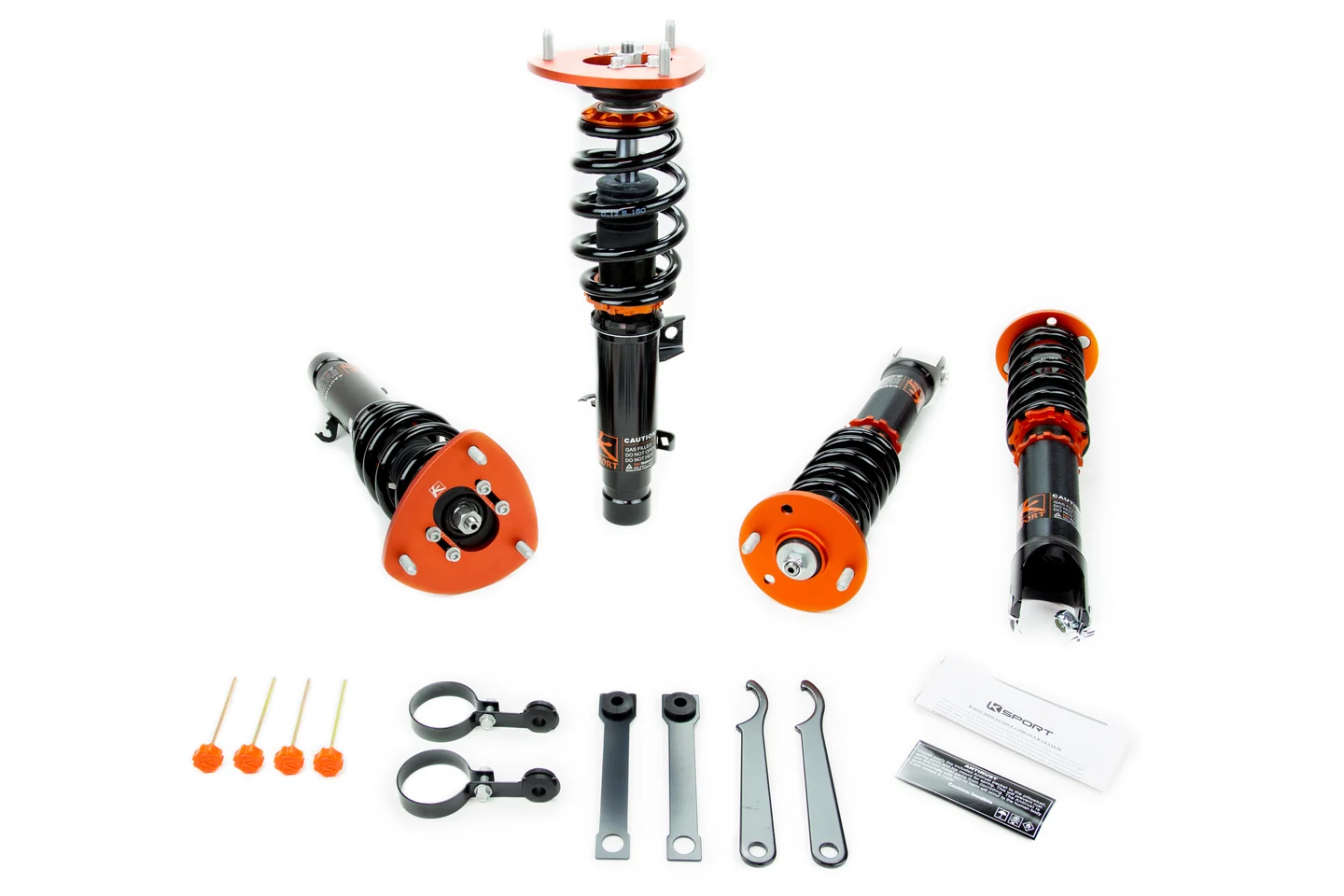
Daily driving + track days
Kontrol Pro
36-way simultaneous compression and rebound adjustment. The starting point for a street car that sees the occasional track day.
From $1,028.50Availability varies by application
Explore Kontrol Pro
KSport coilover systems
Compare KSport coilover kits by vehicle and series. Choose your year, make and model, then review the application notes, adjustment features and current price for the exact kit.
A coilover brings a spring and damper together in one assembly. Adjustment features and mounting arrangements depend on the kit, so start with your vehicle before comparing the options.
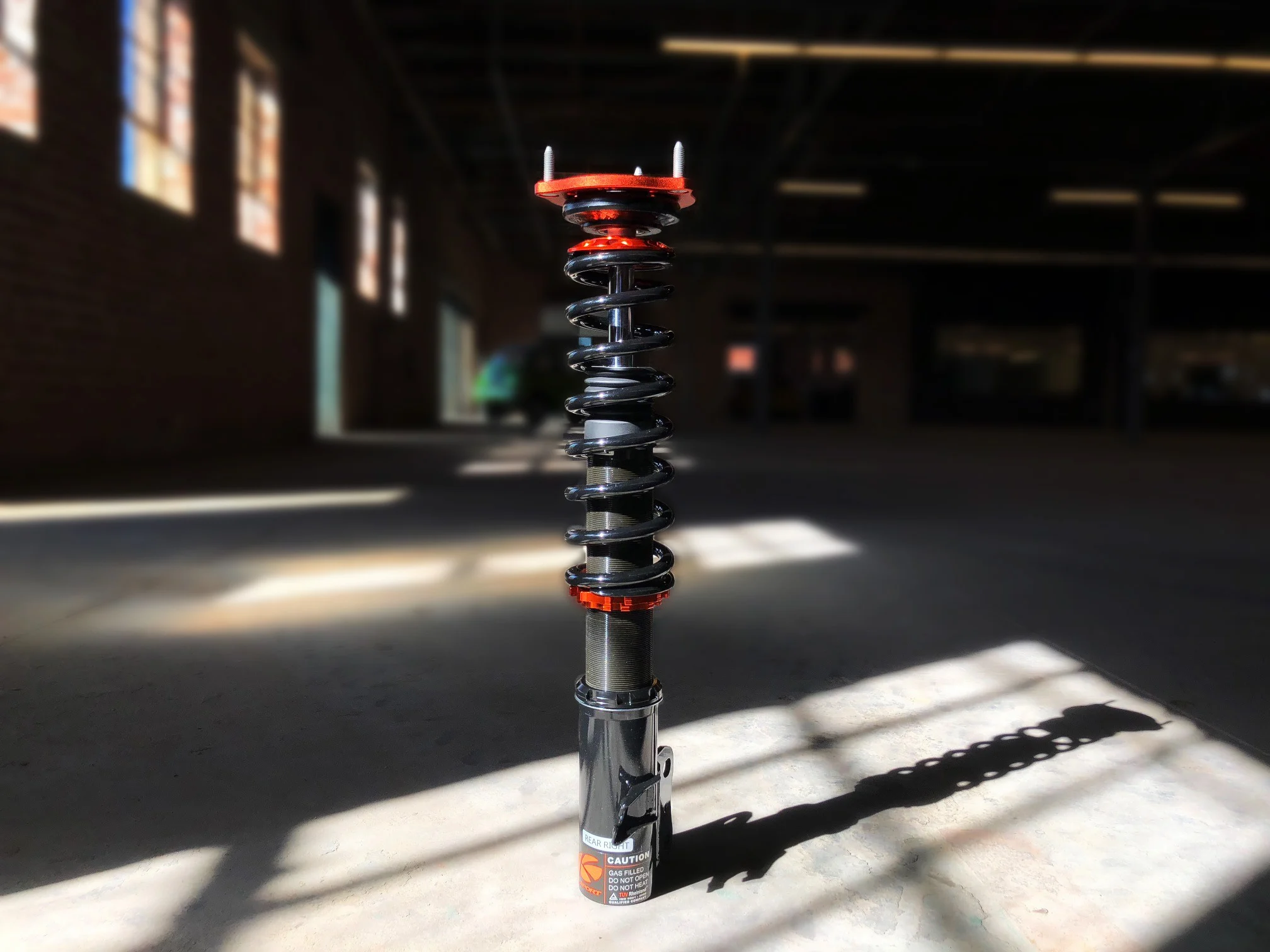
Start with how you drive, then compare KSport coilover series and their damping adjustments. Continue to the vehicle application page to review the system listed for your car.
Vehicle finder
Start with your year, make and model. Check the application notes for chassis, engine, drivetrain and any other restrictions before choosing a part.
Vehicle finder
Prefer to browse? Choose a make below.
Browse a make, open your model guide, then confirm the exact application on the product page.
Browse all makesThe Coilovers guide
Compare the series first, then review the kit listed for your exact application. Mounts, spring rates, adjustment features and included hardware can vary.
Daily driving + track days
36-way simultaneous compression and rebound adjustment. The starting point for a street car that sees the occasional track day.
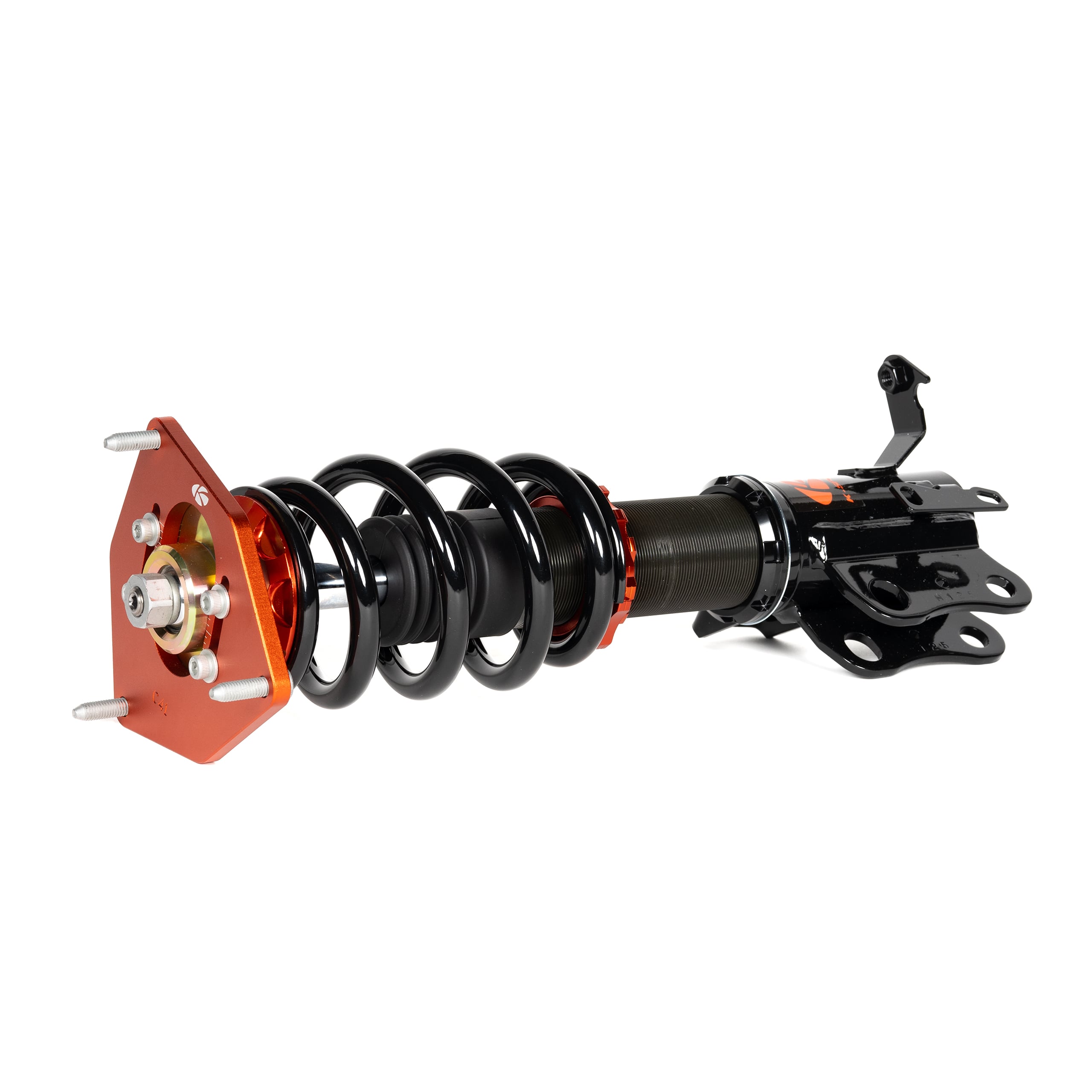
A firmer street setup
30% stiffer valving than Kontrol Pro, with 36-way damping adjustment for aggressive street and intermediate track use.
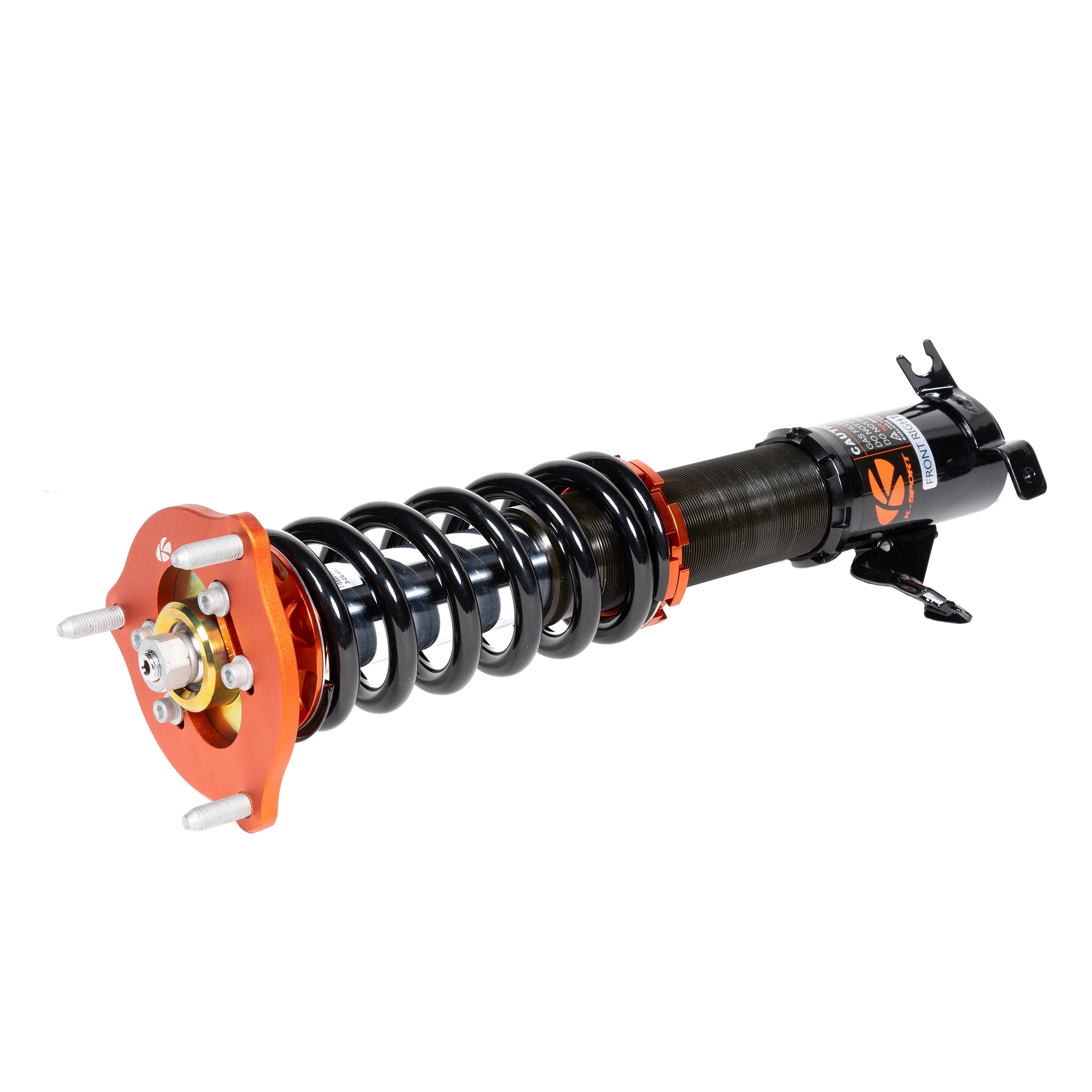
Repeated track sessions
Larger shock bodies and an inverted front design help manage sustained track heat. 36-way damping adjustment.
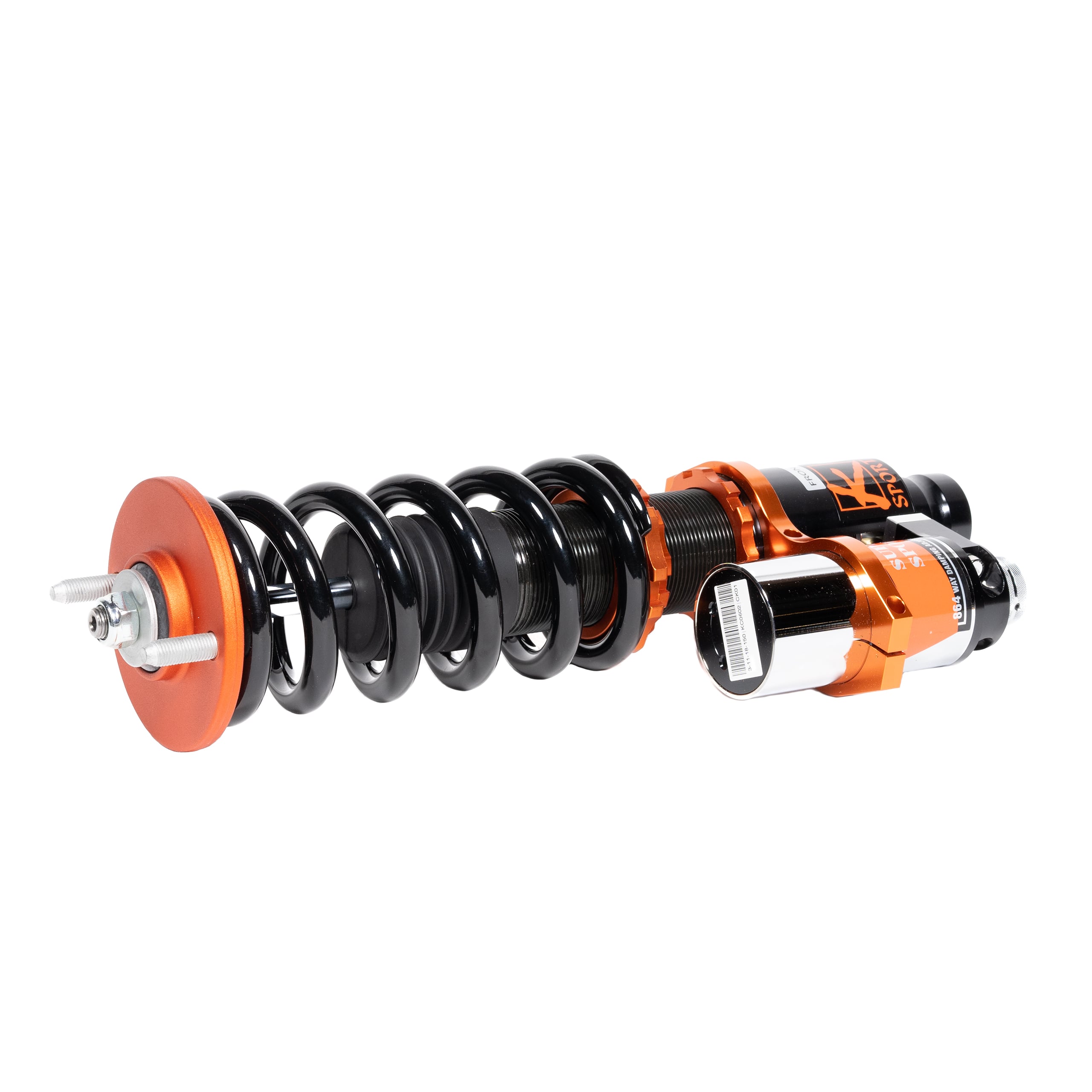
Independent adjustment
Tune compression and rebound separately, with remote reservoirs for more control over your setup.
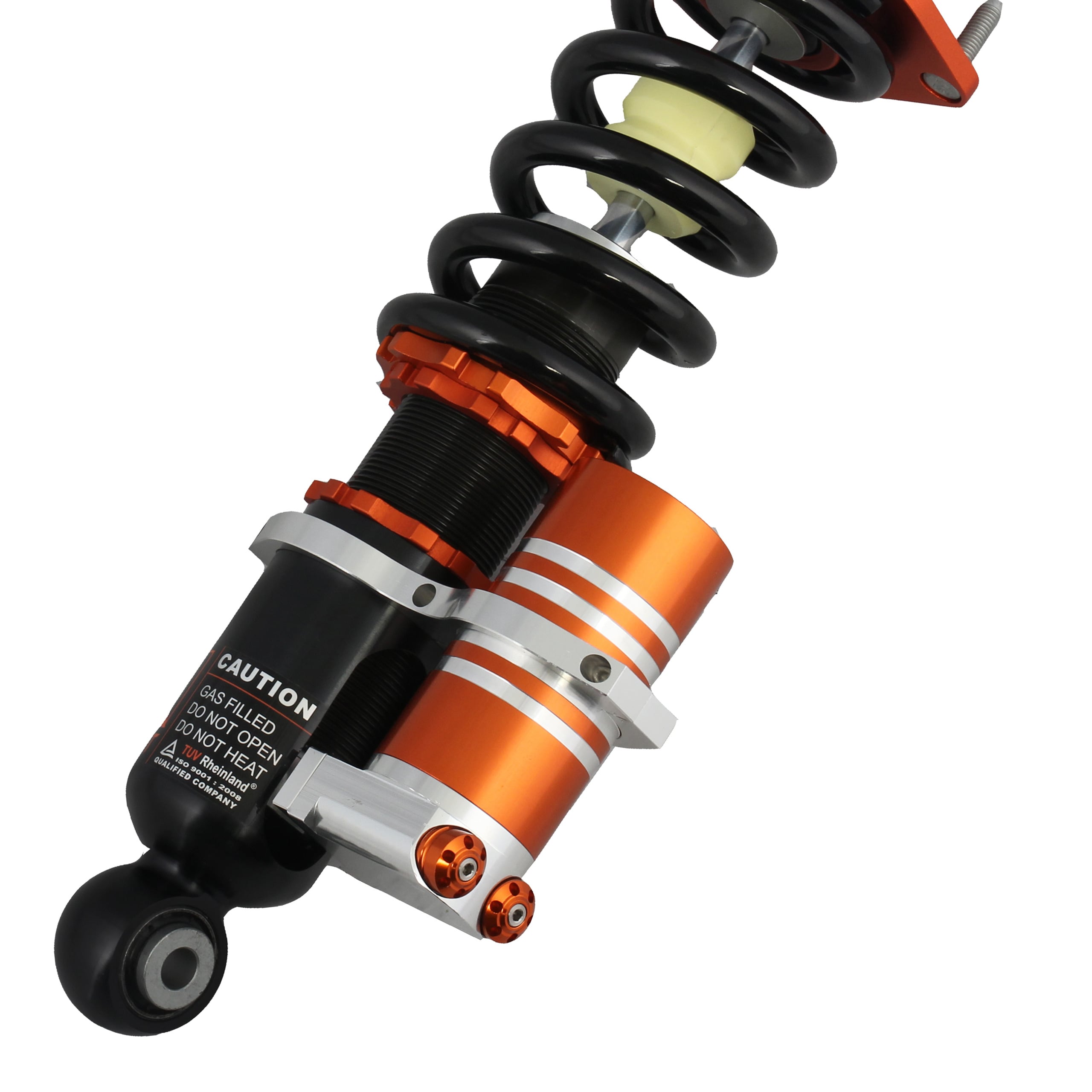
Competition setup
Separate high-speed compression, low-speed compression and rebound adjustment for detailed track tuning.
Photography shows representative hardware. Exact mounts, kit contents and options are confirmed on the application page.
Dedicated disciplines
Specialist setups have different priorities. Explore a discipline to compare its valving, travel and mounting approach.
Parts & applications
Showing 1–20 of 1,719 results

Coilover Kits / Kontrol Pro
CHD010-KP

Coilover Kits / Kontrol Pro
CHD230-KP

Coilover Kits / Kontrol Pro
CAU095-KP


Coilover Kits / Kontrol Pro
CAU021-KP
Coilover Kits / Kontrol Pro
CAU255-KP
Coilover Kits / Kontrol Pro
CAU370-KP
Coilover Kits / Kontrol Pro
CAU431-KP
Coilover Kits / Kontrol Pro
CBM011-KP
Coilover Kits / Kontrol Pro
CBM012-KP
A coilover combines a coil spring and a shock absorber, or damper, in one assembly. The spring carries the vehicle's load and compresses as the wheel moves. The damper controls how quickly that movement happens, helping the suspension settle after a bump instead of continuing to bounce. In an adjustable aftermarket system, threaded hardware lets you set ride height, while an adjustable damper lets you tune its response.
The term describes a layout, not one fixed level of performance. A street kit and a competition kit can both be coilovers while using different springs, mounts and damping. Some vehicles also retain a separate spring and damper at one axle. Start with the system designed for your chassis rather than expecting every corner to look identical.
Keep stock-style springs and shocks or struts when the priority is restoring the original ride and replacing worn parts. Lowering springs make sense for a defined drop with fewer adjustment choices, provided the dampers are compatible with the shorter springs. They do not repair a worn shock, and not every factory damper is suited to a lowered ride height.
Choose coilovers when you want a matched spring-and-damper package and the ability to set the car's height. Adjustable damping adds another way to tune the response. That flexibility also makes installation and setup part of the purchase. Read lowering springs vs. coilovers and coilovers vs. shocks vs. struts for the full comparisons.
Ride height is where the car sits on its suspension. Preload is the spring's initial compression in the assembled unit before vehicle load is applied. Preload does not change the rate of a linear spring, and it is not a substitute for choosing an appropriate spring.
On a design with an adjustable lower mount, ride height can be changed separately from the spring's preload setting. Other layouts use a spring perch or a separate rear spring adjuster, so the correct method depends on the hardware. Follow the application instructions rather than turning whichever collar is easiest to reach. Leave factory preload alone unless those instructions call for a change. Use the KSport lowering-range guide to find the information for your kit; a maximum drop is not automatically a useful driving height.
Compression damping controls the damper as the suspension compresses; rebound damping controls its return. Moving an adjuster changes damping force, not the spring rate. More damping is not automatically more grip or more comfort: excessive damping can make the car feel harsh, while too little can leave it poorly controlled.
A single-adjustable damper has one user control, which may change rebound alone or compression and rebound together depending on the design. Kontrol Pro and Kontrol Sport have 36 levels of damping adjustment. A two-way system commonly separates compression and rebound. A three-way system commonly adds separate low- and high-speed compression controls alongside rebound. Here, speed means damper-shaft movement, not road speed. Extra controls are useful when you can test and record their effects; the adjustment count alone does not select the right kit.
Camber is the wheel's inward or outward tilt when viewed from the front. A camber plate provides adjustment at a compatible strut top mount. A pillowball is a spherical bearing that allows articulation; it is not, by itself, proof that the mount has camber adjustment. Suspension layout determines where alignment can be adjusted.
Rubber mounts isolate vibration and road noise. A rigid bearing mount can give a more direct connection but transmit more noise and vibration into the cabin. That is a useful trade-off to consider on a commuter, not a reason to assume every unfamiliar clunk is normal. Check the exact mount supplied for your application and have new or persistent noises investigated.
A monotube damper uses one main working cylinder, commonly separating pressurized gas from oil with a floating piston. A twin-tube design uses an inner working tube and an outer oil reservoir. Both control motion by metering oil through valves. KSport's cataloged coilover design uses monotube dampers and 6061-T6 billet aluminum hardware. Construction matters, but the name of the damper layout alone does not tell you how a car will ride. Spring choice, valving and the complete installation matter too.
For street use, choose springs and mounts around the roads you actually drive. Keep a practical ride height with room for suspension travel, steering and tire clearance. Begin at the kit's specified damping baseline, then make small, recorded changes toward a softer or firmer response within the permitted range. Full soft is not a universal starting setting.
A hard spring, firm damping and rigid mounts can all increase the inputs you feel. Lowering excessively can add clearance problems and reduce usable travel on some designs. Decide which compromises you want before choosing a competition-focused system for a commuting car. The most expensive series is not automatically the most comfortable one.
KSport offers about ten coilover lines for different uses. For a street-focused build, start with Kontrol Pro and Kontrol Sport; Kontrol Sport is valved about 30% stiffer than Kontrol Pro. For street/track priorities, compare those with GT Pro and Kontrol Plus 2-Way. For a dedicated track build, include Circuit Pro 3-Way and Version RR.
Specialist disciplines deserve their own comparison: Slide Kontrol for drift, Asphalt AR and Gravel GR for rally, and Version DR for drag. Use these pages to compare the intended setup, then choose the exact vehicle application. A discipline label does not make different kits interchangeable.
Compare manufacturer-published features: K Sport vs BC Racing and K Sport vs TEIN. Verify the exact series and vehicle application.
Coilover cost changes with the application, damper design, adjustment functions, mounts and selected options. Use the live product listing for the current KSport price. Budget for professional installation and an alignment as well as any application-specific supporting parts.
Installation includes checking clearances, securing the hardware and setting ride height before alignment. Keep a record of the starting height and damping settings so changes are repeatable. Recheck the installation as directed by the kit instructions, and keep adjustment threads clean. The coilover support guide covers setup and care; have your installer work from the instructions for the exact kit.
Yes, a street-focused coilover can suit a daily driver. Choose the spring rate and mounts for your roads, keep a moderate ride height and tune damping from the specified baseline; a competition setup can feel much firmer.
Coilovers give you more control over ride height and, on adjustable kits, damping. Lowering springs can suit a simpler fixed-drop project when matched to compatible dampers; the better choice depends on how much adjustment you need.
Select your vehicle to see current prices for matching kits and options. Include installation and an alignment in the project budget; those services are separate from the product price.
There is no single lifespan for every coilover. Mileage, road conditions, corrosion, use and maintenance affect wear; inspect for leaks, damage or a change in ride control and use the support and service information for the next step.
Yes. Have the car aligned after installation at its intended driving height, and have alignment checked again after a meaningful height change; lowering can change wheel alignment.
Use the confirmed range for the exact application and retain the required travel and clearance. The lowering-range guide explains where to find that information; the lowest possible setting is not automatically suitable for driving.
Kontrol Pro and Kontrol Sport provide 36 selectable damping settings, letting you tune the damper's response. The adjuster changes damping, not spring rate; begin at the kit's specified baseline rather than assuming full soft is best.
Choose your year, make and model, then match the exact application and part number. Check chassis, drivetrain and other listed restrictions, and ask KSport before ordering if modifications make the application unclear.
There is no best coilover brand for every vehicle. Compare the exact kits listed for your year, chassis and drivetrain, including adjustment layout, spring data, mounts and rear suspension design. The KSport vs BC Racing comparison summarizes manufacturer-published features, not a vehicle-specific ride test; confirm the exact kit before ordering.
Keep your setup working
Match replacement parts to your existing system. If you are unsure which component you need, speak with a technician before ordering.
DOT-compliant stainless-steel braided brake lines, sold as a pair, for KSport big brake kits.
Accessories and add-ons for KSport coilover systems.
Replacement parts to keep your suspension investment on the road: dust boots, metal and rubber pillowballs, pillowball assemblies, spring-perch locking collars, bushings, shocks, and hardware.
Replace worn coilover springs or change performance and handling. KSport springs are made from silicon chrome for strength, durability, and a comfortable ride.
Vehicle-specific cancellation modules prevent a service light or suspension fault when compatible factory electronically damped shocks are replaced. These products do not electronically adjust KSport dampers; electronic control products remain in their verified product families.
Talk through fitment, driving goals or replacement parts with KSport.