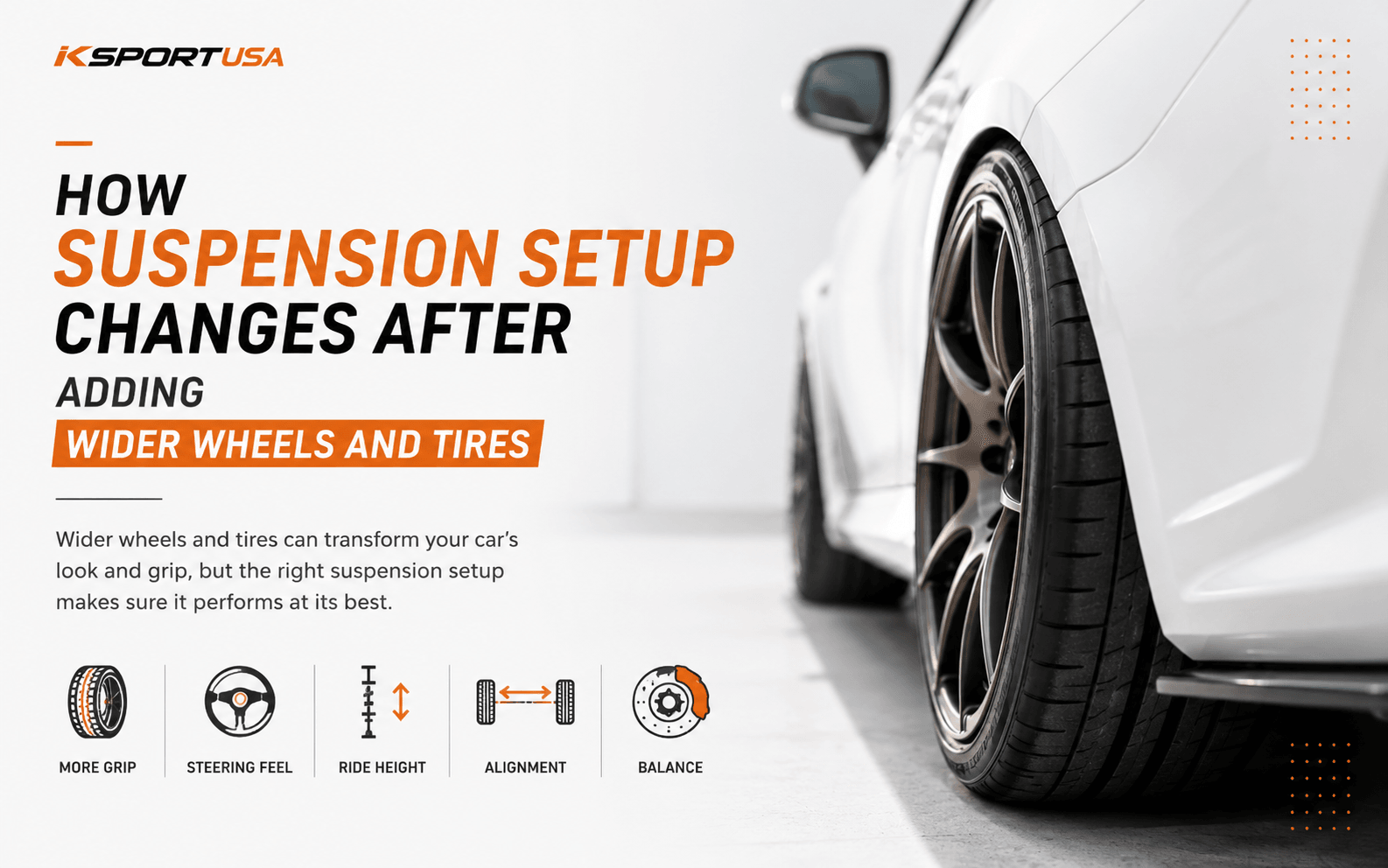
Wider wheels and tires are among the most popular upgrades for performance cars.
They can improve grip, create a more aggressive stance, and completely change how a car looks. But installing wider wheels is not just a cosmetic modification. Changes in wheel width, tire size, and fitment can also influence how the suspension and steering feel.
Whether you drive a Honda Civic Type R , Subaru WRX , Toyota GR86 , Nissan 350Z , or Ford Mustang , your suspension setup should complement your new wheel and tire combination.
Links from this passage:More Grip Changes How the Car Responds
Wider performance tires can provide a larger contact patch and potentially increase available grip, depending on the tire and setup.
With additional grip, you may notice changes in steering response, cornering behavior, and how quickly the chassis reacts to driver inputs.
This is why enthusiasts should consider suspension tuning alongside wheels and tires rather than treating each modification separately.
Wheel Fitment Can Affect Steering Feel
Wheel width is only part of the equation.
Offset, tire dimensions, wheel weight, and alignment can all influence how the vehicle feels behind the wheel.
For cars like the BMW 3 Series , Honda Civic , and Subaru WRX , moving to a more aggressive wheel setup may change steering effort or responsiveness.
Links from this passage:The goal should be finding a combination that provides the desired fitment without compromising predictable handling.
Ride Height Becomes Even More Important
Adding wider wheels and tires often goes hand in hand with lowering a car.
However, simply dropping the ride height until the wheel gap disappears can create problems.
Too little clearance may cause rubbing during cornering or suspension compression. Excessive lowering can also reduce usable suspension travel.
Adjustable systems such as Ksport Kontrol Pro Coilovers allow enthusiasts to fine-tune ride height while considering wheel clearance, suspension travel, and the vehicle’s intended use.
Links from this passage:Alignment Should Be Part of the Upgrade
After changing wheel dimensions, tire sizes, or ride height, alignment becomes especially important.
Camber, toe, and other alignment settings can influence steering response, tire wear, and overall handling.
A daily-driven Toyota GR86 may need a different approach from a Nissan 350Z prepared for weekend performance driving.
Links from this passage:Instead of chasing aggressive alignment numbers simply for appearance, settings should match how the vehicle is actually driven.
Suspension and Tires Should Work Together
A performance tire cannot deliver its full potential if the suspension struggles to maintain consistent contact with the road.
Likewise, an upgraded suspension cannot compensate for a poorly matched wheel and tire setup.
This is why the best builds consider wheels, tires, suspension, alignment, and brakes as parts of one system.
Links from this passage:For enthusiasts upgrading the complete package, Ksport USA suspension systems and Ksport Big Brake Kits can become part of a balanced approach to improving vehicle performance.
Links from this passage:Build Around the Complete Car
A wider wheel and tire setup can dramatically transform a Ford Mustang , Honda Civic Type R , Subaru WRX , Toyota GR86 , or other enthusiast platform.
Links from this passage:But the best results come from looking beyond appearance.
Consider clearance, ride height, suspension travel, alignment, steering response, and how you actually use the vehicle.
At Ksport USA , the goal is not simply to make a car sit lower. It is to give enthusiasts the adjustability needed to create a suspension setup that complements the rest of their build.
When wheels, tires, and suspension work together, the result is not just better fitment. It is a car that feels more complete every time you drive it.