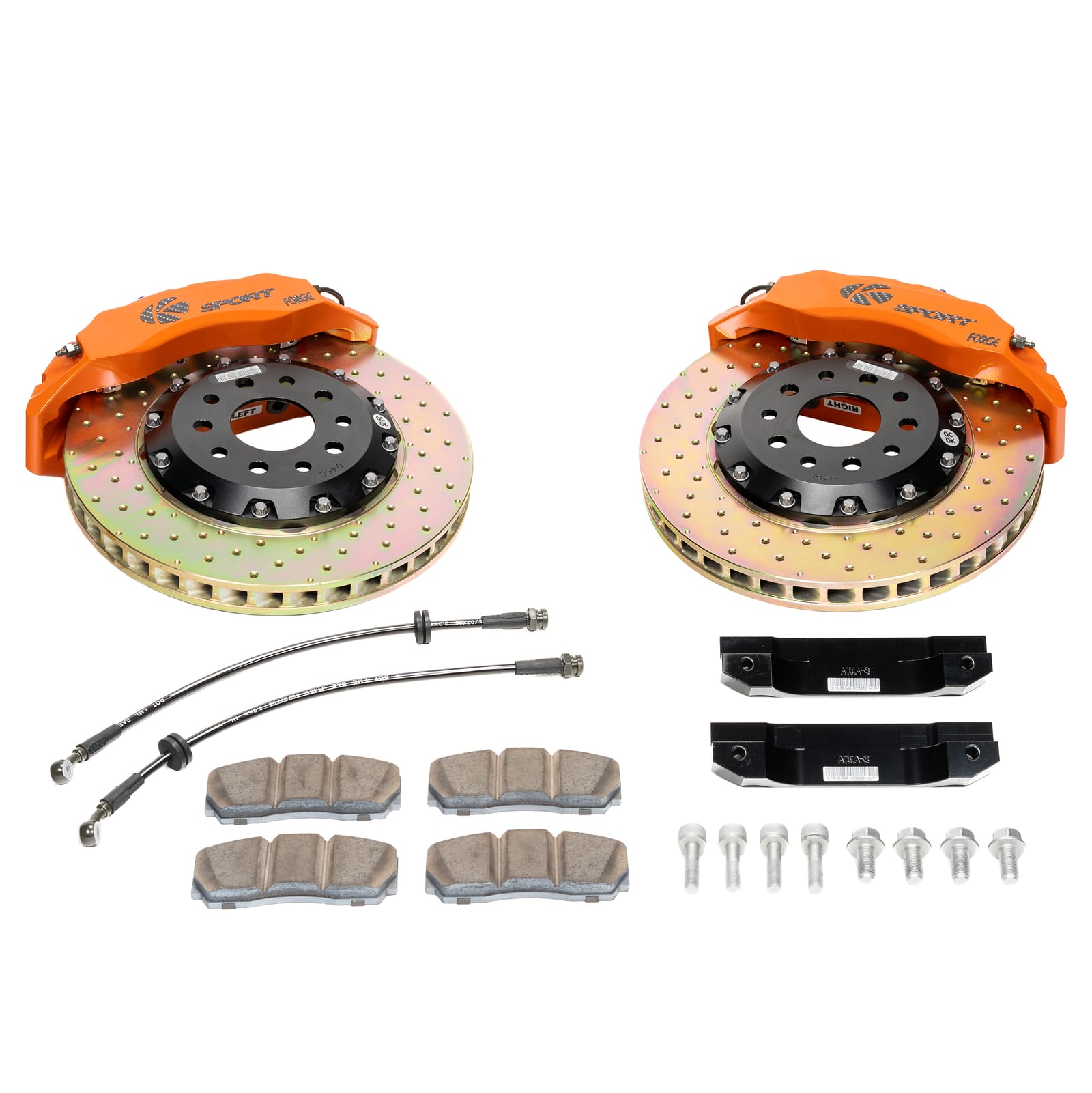
Street + track-day upgrade
Procomp
An application-specific axle kit with multi-piston calipers and two-piece rotors. Start here for a conventional big brake upgrade.
From $1,870.81Availability varies by application
Explore Procomp
KSport braking systems
Compare KSport big brake kit systems, then match the exact kit to your vehicle, axle and wheel clearance.
Explore Big Brake Kits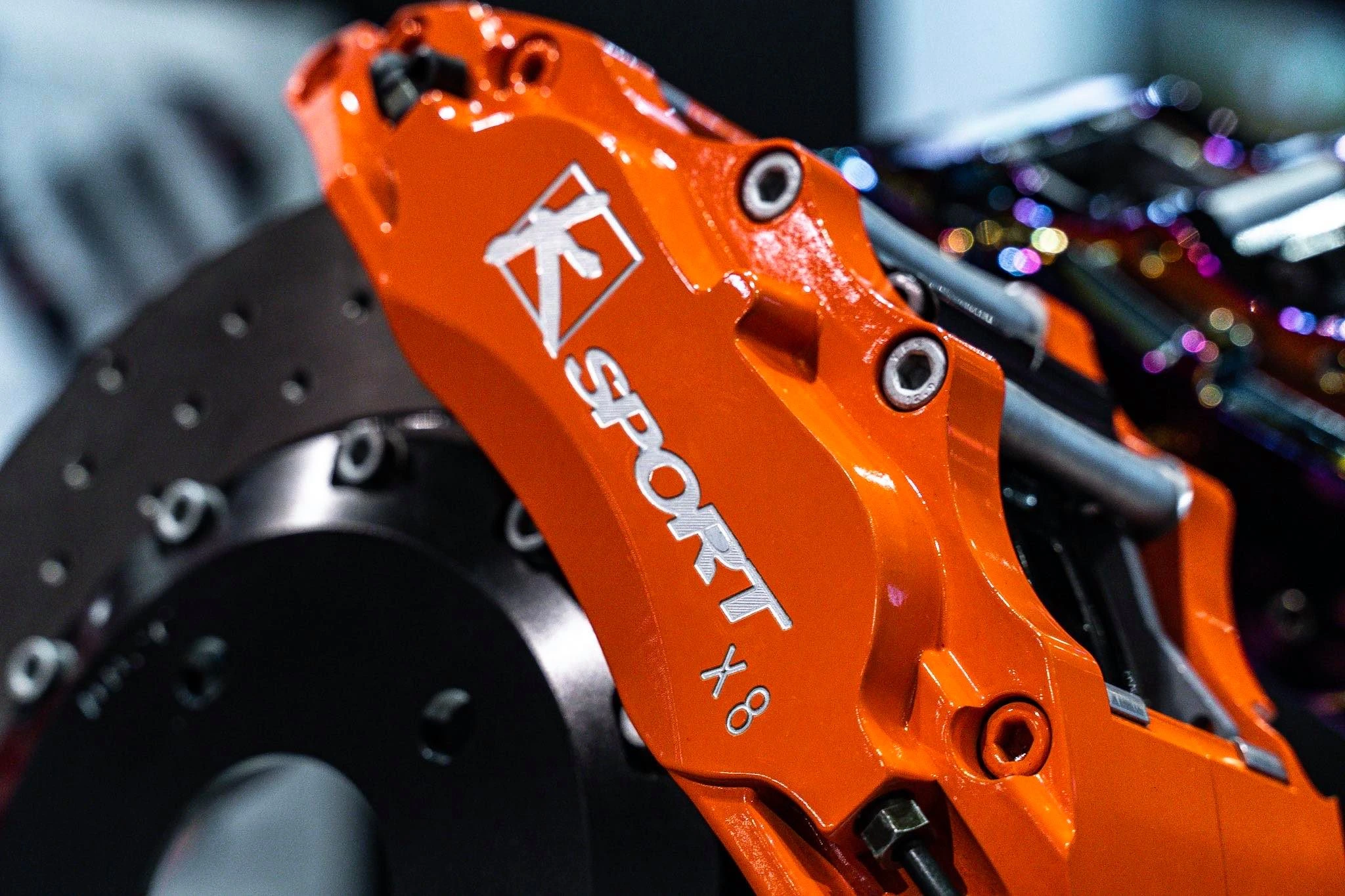
Vehicle finder
Select your year, make and model to see compatible products and current availability.
Vehicle finder
The Big Brake Kits guide
Start with how you use the car. Rotor size, caliper configuration and wheel clearance are application-specific.
Street + track-day upgrade
An application-specific axle kit with multi-piston calipers and two-piece rotors. Start here for a conventional big brake upgrade.
Larger hardware + floating rotors
Larger calipers, rotors and pads than Procomp, with full-floating two-piece rotors. Check the available configuration and wheel clearance.
Drift + rally
A rear four-piston caliper with separate foot-brake and hydraulic handbrake circuits. Choose it for a dedicated drift or rally setup.
Limited wheel clearance
A narrow, single-side three-piston front caliper for wheels with limited clearance. Confirm fit with the correct wheel template.
Photography shows representative hardware. Exact mounts, kit contents and options are confirmed on the application page.
Before you order
Brake kits are sold for a specific axle. Match the vehicle and front or rear position before choosing a kit.
Wheel diameter alone does not establish clearance. Confirm the rotor and caliper configuration using the application’s wheel template.
Review rotor style, caliper finish and pad choices on the exact application. A technician can help with the combination.
Parts & applications
Showing 1,801–1,820 of 12,103 results

Big Brake Kits / Dualcomp
BKBM110-435CO

Big Brake Kits / Dualcomp
BKBM110-435SO

Big Brake Kits / Supercomp
BKBM110-437CO
Big Brake Kits / Supercomp
BKBM110-437SO
Big Brake Kits / Procomp
BKBM110-443CO
Big Brake Kits / Procomp
BKBM110-443SO
Big Brake Kits / Dualcomp
BKBM110-445CO
Big Brake Kits / Dualcomp
BKBM110-445SO
Big Brake Kits / Supercomp
BKBM110-447CO
Big Brake Kits / Supercomp
BKBM110-447SO

Big Brake Kits / Supercomp
BKBM110-653CO
Big Brake Kits / Supercomp
BKBM110-653SO
Big Brake Kits / Procomp
BKBM110-841CO
Big Brake Kits / Procomp
BKBM110-841SO
Big Brake Kits / Supercomp
BKBM110-846CO
Big Brake Kits / Supercomp
BKBM110-846SO
Big Brake Kits / Supercomp
BKBM110-863CO
Big Brake Kits / Supercomp
BKBM110-863SO
Big Brake Kits / Supercomp
BKBM110-951CO
Big Brake Kits / Supercomp
BKBM110-951SO
A big brake kit replaces selected factory brake components with a matched upgrade for a particular vehicle and axle. A kit typically combines calipers, rotors and the hardware needed to position them correctly; pads, hoses and other contents depend on the listing. It is a system choice, not simply a larger disc fitted to the existing caliper.
A larger effective rotor radius gives the brakes more leverage. A rotor with greater thermal capacity can also handle more energy before its temperature rises as far. Those characteristics matter during repeated braking, where controlling heat is a major part of consistent performance. They do not promise that any larger kit will shorten every stop: tires, road surface, brake balance and the rest of the car still matter.
Start with the problem you want to solve. Worn factory brakes need proper service before they need a larger caliper. For a mainly street-driven car, suitable pads, healthy rotors and the correct fluid may address the actual need without a complete conversion. A recurring heat problem during repeated hard use calls for a broader look at pads, cooling and brake-system capacity.
Choose a kit around the vehicle, axle and intended use. The caliper, rotor, pad and mounting arrangement need to work together and with the car's brake system. More pistons or a larger diameter is not a ranking that makes every other consideration disappear. Identify the available application first, then compare its specifications and service requirements.
Diameter affects the rotor's leverage and the space required inside the wheel. Thickness, mass and ventilation also affect how it deals with heat. Two rotors with the same diameter are not necessarily interchangeable: thickness, offset, mounting arrangement and pad contact area matter as well.
A one-piece rotor combines its friction ring and center in one casting. A two-piece design uses a separate friction ring and center, often called a bell or hat. The connection can be fixed or allow controlled movement, depending on the design. Compare the actual construction and replacement parts instead of assuming every two-piece rotor floats or every larger rotor weighs less. Treat drilled, slotted and plain surfaces as part of the use-specific choice, not a substitute for correct size and compatibility.
Wheel diameter alone cannot confirm brake clearance. The inner barrel must clear the rotor and caliper, and the back of the spokes must clear the caliper's outward profile. Wheel offset, spoke shape and the position of balance weights can change the available room. Two wheels carrying the same nominal size can therefore give different results.
Use the clearance drawing or template for the exact brake application against the actual wheel. Follow its scale and measurement instructions and check the required clearance throughout the relevant profile. Do not order from a diameter rule of thumb or assume a spacer is an approved cure. KSport's brake-system support explains how to request a template when you need one.
Pad compound changes how the brakes respond across their operating temperatures. A street-focused choice needs useful cold response as well as manageable noise, dust and wear. A track-focused compound may prioritize high-temperature performance and accept compromises that are unpleasant on the commute. A pad being called racing does not automatically make it the best choice for normal road use.
Match both the compound and the pad shape to the installed caliper. Similar dimensions or a shared brand name do not establish a cross-reference. Ask about the actual driving you do, including whether the same pads will see street miles and track sessions. Follow the bedding instructions supplied for the selected pads and rotors rather than using a generic procedure for every friction material.
For street use, compare cold response, pedal feel, noise, dust, corrosion exposure and replacement-part availability. For track use, include repeated braking energy, cooling, pad temperature range and inspection intervals in the plan. A car that does both needs an explicit compromise or a planned change of suitable consumables, rather than the assumption that one extreme setup is ideal everywhere.
Front and rear choices must preserve an appropriate system balance. They are not interchangeable, and a rear-only appearance upgrade is not a complete brake plan. Confirm the vehicle-specific kit, axle, hydraulic compatibility and any parking-brake requirements. Retain the exact application's restrictions instead of applying a statement from another car's kit.
Use Procomp, Supercomp, Dualcomp and Slimline as the starting comparison pages, then open the matching vehicle application. Compare the listed axle, caliper, rotor, included components and options. A family name does not confirm wheel clearance or the contents of a particular order.
Keep service parts separate from complete kits while shopping. A replacement rotor, caliper, pad set or line is for a known system; it is not enough to complete a conversion on its own. For an existing KSport setup, record its part numbers before choosing replacements. The caliper-finish guide covers appearance choices separately from the fit and operating requirements.
Have a qualified brake installer work from the instructions for the exact kit. Installation includes verifying the mounting and clearances, correct hose routing, the specified fluid and bleeding procedure, and the required checks before the car returns to use. Bedding prepares the pad-and-rotor interface; it does not fix incorrect hardware or an unresolved installation problem.
After installation, follow the supplied inspection and service instructions. Track use can require more frequent checks and a different consumable plan than normal commuting. Keep the kit, pad and rotor identifiers with the car so replacements can be matched accurately. Use brake-system support when a specification or replacement reference is missing.
Compare the current live KSport price for the exact vehicle, axle and selected options. Include installation, fluid, any application-required supporting work and the ongoing cost of compatible pads and rotors. Check your wheel-clearance plan before buying the kit; discovering that a wheel does not fit can change the entire project.
The useful final comparison is a complete installed system that suits your driving. Start with the vehicle finder, read the application and contents, and use the exact clearance information. If one of those is missing, ask KSport with the vehicle, wheel details and proposed part number so the missing fact can be resolved before ordering.
Not automatically. More brake leverage and heat capacity can help the right system, especially during repeated braking, but stopping distance also depends on tires, road conditions and the complete vehicle; no universal reduction is promised.
Use the exact kit's clearance drawing or template against your wheel. Wheel diameter alone does not confirm barrel or spoke clearance; request the application template if it is missing.
No. Piston count alone does not describe brake torque, balance, stiffness or compatibility. Compare the complete caliper-and-rotor system designed for your vehicle and axle.
Not every upgrade requires both axles at once. Follow the approved vehicle-specific plan and preserve brake balance; front and rear kits are not interchangeable, and a rear-only change needs particular care.
Only if the particular compound is suitable for street use. Some competition pads trade cold response, noise or wear for high-temperature performance, so match the compound to the driving you actually do.
Yes, follow the bedding instructions for the selected parts after installation checks are complete. A generic bedding routine cannot correct an installation fault or replace the specified procedure.
The exact listing and selected options define the contents. Check the vehicle, axle, calipers, rotors and all other included components; an individual service-part listing is not a complete kit.
Choose your application, axle and options for the current catalog price. Include installation, fluid and any application-required work in the project budget, then consider compatible pad and rotor replacement costs.
Keep your setup working
Replacement rotors, pads and calipers belong to the kit you already have. Lines and mounting hardware must match its specification.
Replacement 2-, 4-, and 8-piston calipers for KSport big brake kits. Match the caliper to the rotor size and axle of your existing kit.
Caliper brackets, center bells and mounting hardware for the exact system.
DOT-compliant stainless-steel braided brake lines, sold as a pair, for KSport big brake kits.
Replacement street (SC) and race (RC) pads for KSport big brake kits. Choose the pad that matches your caliper piston count and rotor size.
Match rotor size, style and axle to your existing KSport kit.
Talk through fitment, driving goals or replacement parts with KSport.