
Air Suspension Kits / Airtech Basic Air Suspension
03-06 Infiniti G35 - Airtech Basic Air Suspension
CIN261-ABA
$3,255.96Available to order

Parts & applications
Showing 121–140 of 324 results
Air Suspension Kits / Airtech Basic Air Suspension
CIN261-ABA
Air Suspension Kits / Airtech Basic Air Suspension
CIN262-ABA
Air Suspension Kits / Airtech Basic Air Suspension
CIN290-ABA
Air Suspension Kits / Airtech Basic Air Suspension
CIN300-ABA
Air Suspension Kits / Airtech Basic Air Suspension
CIN310-ABA
Air Suspension Kits / Airtech Basic Air Suspension
CIN350-ABA
Air Suspension Kits / Airtech Basic Air Suspension
CJA020-ABA
Air Suspension Kits / Airtech Basic Air Suspension
CJA021-ABA
Air Suspension Kits / Airtech Basic Air Suspension
CJA030-ABA
Air Suspension Kits / Airtech Basic Air Suspension
CKI080-ABA
Air Suspension Kits / Airtech Basic Air Suspension
CLX020-ABA
Air Suspension Kits / Airtech Basic Air Suspension
CLX050-ABA
Air Suspension Kits / Airtech Basic Air Suspension
CLX060-ABA
Air Suspension Kits / Airtech Basic Air Suspension
CLX070-ABA
Air Suspension Kits / Airtech Basic Air Suspension
CLX080-ABA
Air Suspension Kits / Airtech Basic Air Suspension
CLX090-ABA
Air Suspension Kits / Airtech Basic Air Suspension
CLX100-ABA
Air Suspension Kits / Airtech Basic Air Suspension
CLX110-ABA
Air Suspension Kits / Airtech Basic Air Suspension
CLX131-ABA
Air Suspension Kits / Airtech Basic Air Suspension
CLX140-ABA
Airtech air suspension
Air ride suspension built around your car: application-specific Airtech air struts with a choice of control systems. Build the air bag suspension setup around the way you want to adjust your ride.
Your height. Your control.
Explore Air Suspension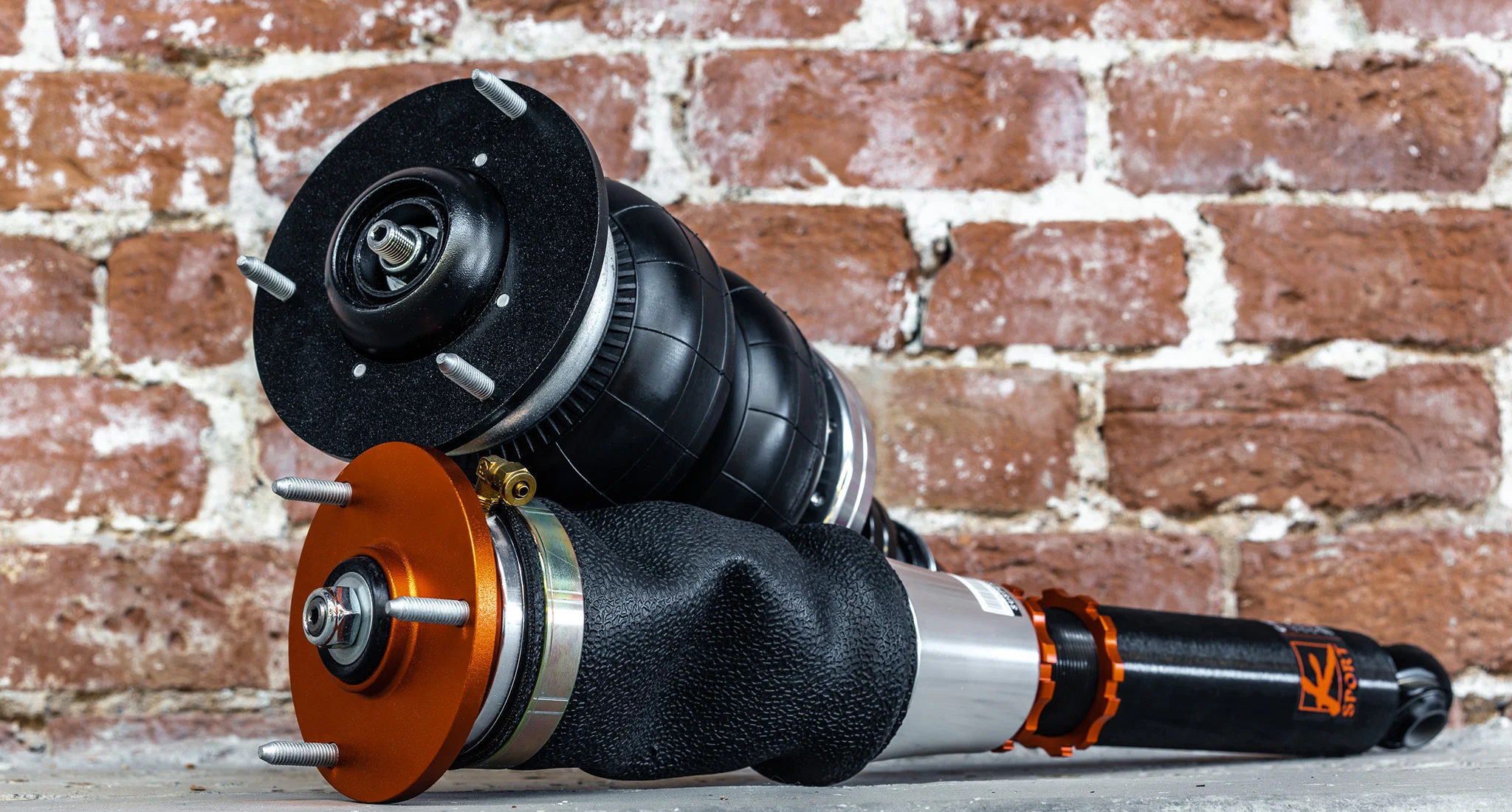
Vehicle finder
Select your year, make and model to see compatible products and current availability.
Vehicle finder
The Air Suspension guide
A complete system, control for an existing setup, or air struts to pair with your own management.
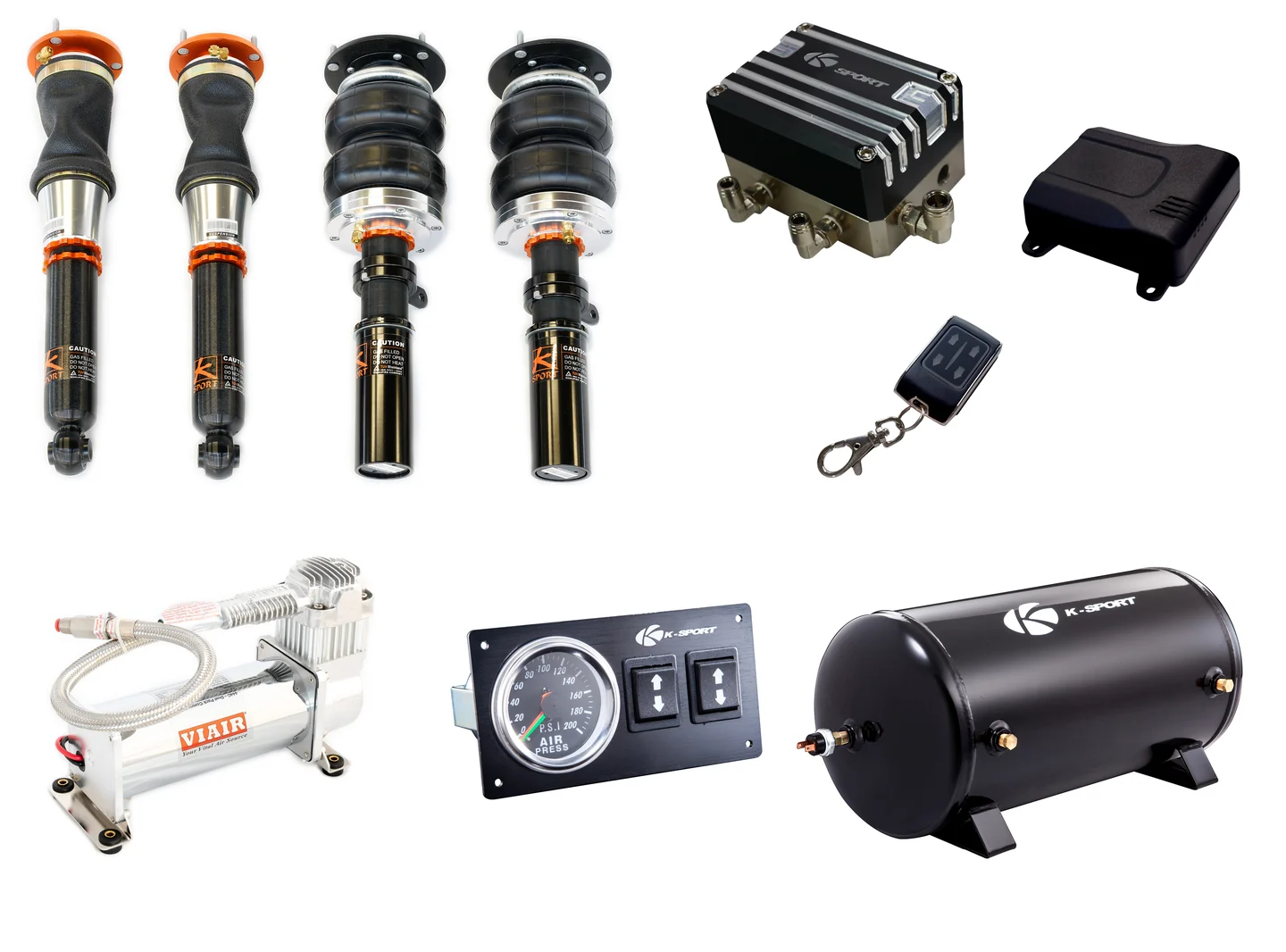
Starting from scratch
Air struts, compressor, tank and management. Choose Basic, Deluxe, Pro Plus or Executive below.
Compare control levels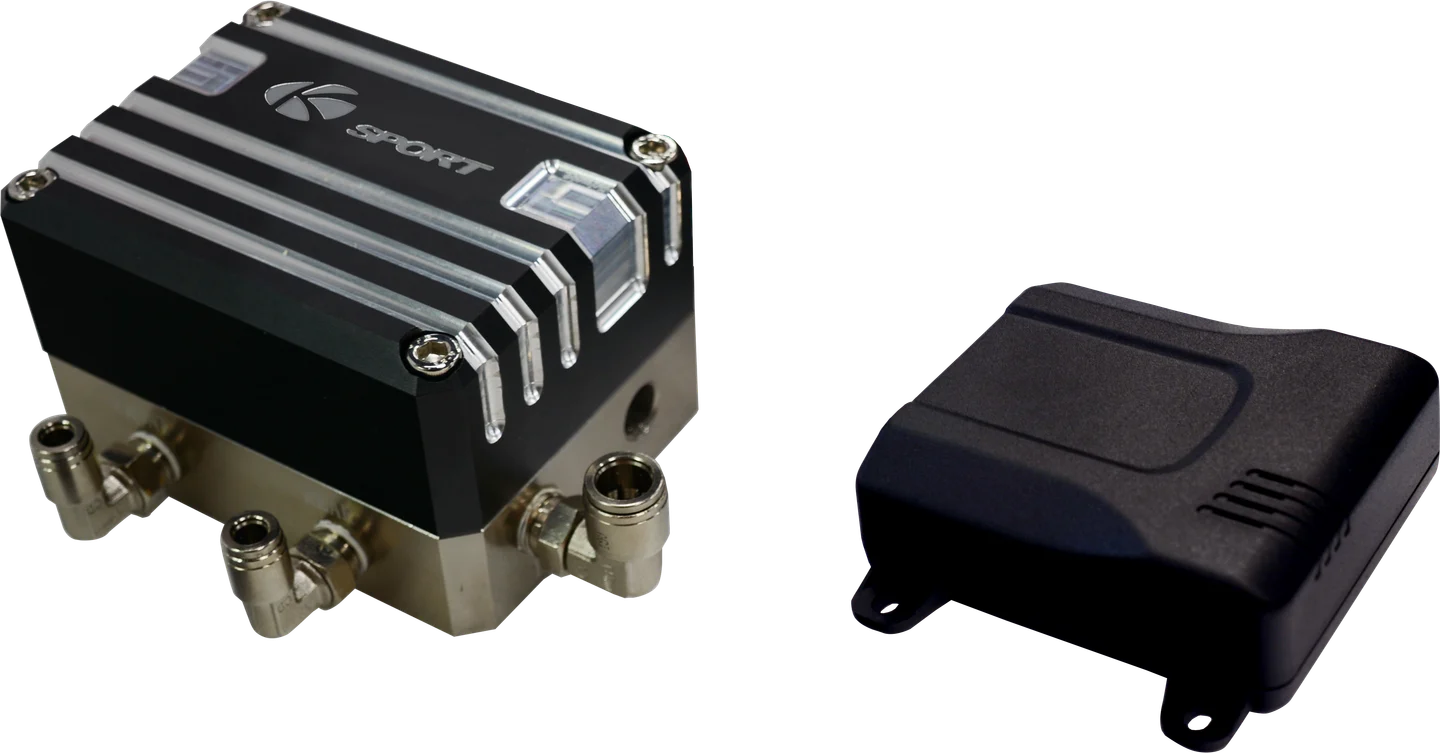
Already have air struts?
Discuss controls for your existing setup. Confirm compatibility and exactly which components you need with a KSport technician.
Discuss your setup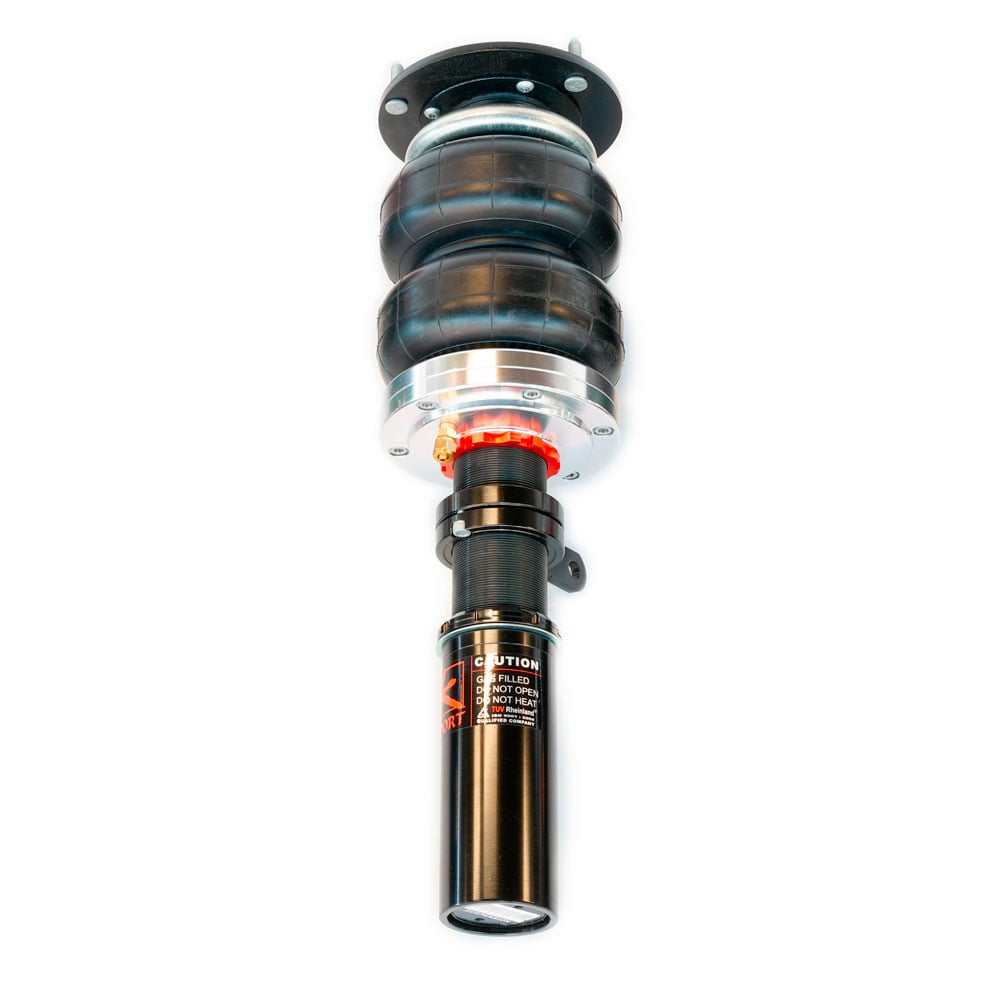
Already have management?
Front and rear Airtech air struts, without compressor, tank or controls. Choose the correct application for your car.
Photography shows representative hardware. Exact mounts, kit contents and options are confirmed on the application page.
Complete Airtech systems
The complete systems share Airtech struts and a compressor. Management determines how you adjust and maintain your height.
Manual control
Paddle valves and an analogue pressure gauge. A complete system with straightforward manual height control.
Electronic switches + remote
Electronic switches and a wireless remote control ride height from inside or outside the car.
Digital pressure management
Four-wheel independent control from an OLED remote, with automatic pressure-based leveling.
Height-sensor management
Adds four ride-height sensors for automatic leveling based on actual height, with independent control at each corner.
Air suspension uses compressed air in flexible air springs to support the vehicle. Adding or releasing air changes the spring's support and can change ride height. Dampers still control suspension movement, just as they do with a steel coil spring. An air strut combines these functions in an assembly; other vehicle layouts can use separate air springs and dampers.
Air ride and air bag suspension are common names for these systems. An air bag is a component, not a guarantee that a listing contains everything for a conversion. Likewise, an individual air shock is not automatically a replacement for a complete air strut. The vehicle application and included-components list tell you what you are buying.
Choose air when changing height through controls is a central part of the build. It can let you use a practical driving height and a different parked height without manually resetting threaded suspension hardware. That adds air supply, plumbing and controls to the installation, with their own space and maintenance requirements.
Coilovers use steel springs and usually set height through threaded mechanical adjustment. They can suit a build that wants a consistent driving height without onboard air equipment. Neither choice automatically makes the car comfortable or track-ready: spring characteristics, damping, travel, mounts and setup all matter. Compare the coilover options around how you actually want to adjust and use the car.
Think in three groups: vehicle-specific suspension hardware, an air supply and management. The suspension group contains the air springs or struts and the parts that fit the chassis. The supply group stores and replenishes compressed air. Management controls air entering and leaving the springs, either manually or electronically.
A conversion can involve a compressor, tank, valves or manifold, air lines, fittings, wiring, controls and suspension hardware. That is a planning checklist, not a promise that every listing includes each item. Compare the exact contents before combining purchases. Decide where the tank and compressor will mount and how the equipment will share space with the things you carry every day.
Manual controls let the driver add or release air while watching the system's gauges and the car's position. Electronic switching moves the control to buttons or a remote. Digital pressure management monitors air pressure and can use pressure targets for repeatable settings.
Height-based management adds sensors that measure suspension position. This is a different measurement from air pressure: the pressure needed to support a particular height can change with load and conditions. A height-sensing system uses that position feedback rather than treating one pressure reading as a universal height. Features such as presets, leveling and remote control belong to the selected management system; do not assume every electronic controller has them.
KSport's Airtech range has four complete-system paths. Basic uses manual paddle controls and an analog pressure gauge. Deluxe adds electronic switching and a wireless remote. Pro Plus uses digital pressure-based management, while Executive uses ride-height sensors for position feedback. Choose the control functions you will use, then verify the equipment and options on the matching vehicle application.
Starting with an empty car is a different project from replacing worn air struts in an existing installation. Use the complete-system path for a full conversion comparison. For an existing setup, identify the installed management and suspension part numbers before buying replacement components. A familiar connector or similar-looking bag does not establish compatibility.
A properly selected and installed air system can be used on a daily driver. Set a driving position that provides suspension travel, tire and body clearance, and room for the air springs and lines to move without rubbing. Check these relationships through steering and suspension movement, not just with the car parked straight ahead.
The lowest parked setting is not a driving setup. Use the application's pressure, travel and clearance requirements, and have the car aligned at its normal driving height. Ride quality comes from the complete setup, including the dampers and mounts; raising the car does not guarantee it will feel like stock. Include everyday roads, passengers and luggage in the installation plan rather than calibrating only for an empty car on a flat floor.
Have an experienced suspension installer plan the conversion around the exact vehicle. Air lines need protection from heat, sharp edges, moving components and tire contact. Electrical supply, fusing, grounding and component mounting must follow the supplied instructions. A compressor also needs a suitable installation location; it is not simply loose luggage in the trunk.
Before normal use, the installer should complete the system's leak checks, clearance checks and any management calibration, then establish the intended driving height and alignment. Keep the part numbers and setup information with the car. When a fault appears later, knowing which struts, controller and compressor are installed makes troubleshooting and replacement much more straightforward.
Air suspension needs routine inspection. Look for rubbing, damaged lines, loose connections and changes in how often the compressor operates. Moisture collects when air is compressed, so tank drainage and any moisture-control equipment are part of the system's care. Follow the instructions for the installed tank and management rather than assuming one schedule fits every climate.
KSport's air suspension support guide covers inspection, condensation and leak checks. Use the prescribed test for the actual system if it loses height or pressure; do not repeatedly add air and ignore the cause. Unusual compressor activity or a recurring loss at one corner is a reason to inspect the installation, not just save a new preset. Keep the tank drain accessible when planning the equipment layout.
The total project includes suspension hardware, the chosen management and air supply, installation and alignment. Existing equipment may reduce what you need to buy, but only when it is compatible. Use the matching live KSport listing for current kit prices and options, and ask the installer to quote the complete work rather than budgeting for the struts alone.
Start with year, make and model, then read the chassis and application restrictions. Keep the vehicle's load limits separate from the air system's ability to change height: a conversion is not permission to carry more weight. For load questions, use the Airtech planning resource linked with this page, and contact KSport with the exact application and installed equipment when a specification is missing.
Yes, with a suitable system, correct installation and regular care. Use the specified driving height and pressures with adequate travel and clearance; the lowest parked setting is not a driving setting.
They are commonly used names for suspension that uses air springs. An air bag is only a component, so check whether the listing is a complete system, strut assembly or replacement part.
It can be comfortable, but air is not automatically softer or better than coilovers. KSport air systems pair vehicle-specific air struts with management options for adjustable height; coilover kits use vehicle-specific spring-and-damper setups with features that vary by series and application. Ride quality depends on the exact setup, so compare fitment and the controls you want.
You need a way to supply and control air for an adjustable system. Onboard management makes that convenient; an individual strut listing does not necessarily include the compressor, tank or controls.
Yes. KSport recommends rechecking the system after 500 miles or one month, whichever comes first. Inspect for rubbing, damaged lines and loose fittings, and drain tank condensation; in most cases, drain every 4–6 weeks, checking every 2–3 weeks during the first six months to learn how often your setup collects water. Follow the instructions for the installed system.
Pressure management works from air-pressure readings; height management adds sensors for suspension position. Load and conditions can change the pressure needed for a given height, so the two readings are not interchangeable.
Choose your vehicle and system for the current catalog price and options. Budget separately for installation, alignment and any compatible equipment the selected listing does not include.
Yes, when the components are compatible. Identify the installed equipment and check the exact strut application, connections and operating requirements before mixing parts; KSport support can help resolve a missing specification.
Not automatically. An individual air shock is not a replacement for a complete air strut, and an air bag is a component, not a guarantee that a listing contains everything for a conversion. The vehicle application and included-components list tell you what you are buying.
Air and coilovers serve different setup goals. Air lets you change ride height through its controls; coilovers use threaded mechanical adjustment. Air adds an air supply, plumbing and controls, and comfort and handling depend on the complete setup, so neither is automatically better for every car.
Keep your setup working
Match replacement parts to your existing system. If you are unsure which component you need, speak with a technician before ordering.
Talk through fitment, driving goals or replacement parts with KSport.